Postsecondary Leaders’ Thoughts on Diversity and Inclusion: Now What?
Leaders of most postsecondary institutions in Canada have stated that their institutions are committed to diversity and inclusion. These commitments are situated in a complex educational climate in which leaders navigate drivers of change such as increased diversity in the student demographic and an increased demand for social justice issues to be addressed. Despite the public commitments to values of diversity and inclusivity, senior leadership in Canadian postsecondary institutions today lacks diversity. Interestingly, public statements of commitment to diversity and inclusivity are made by postsecondary leaders in response to allegations of racism. What do the concepts of diversity and inclusion mean to postsecondary leaders and how are they enacted? To gain an in-depth understanding of how leaders make meaning of diversity and inclusivity, this book offers an integrated social justice leadership framework for diversity and inclusivity. This innovative framework provides a way for leaders to think through their and others’ understanding of diversity and inclusivity within the varying dimensions in which they practice leadership in postsecondary settings. With this understanding, leaders can broach the social justice issues of colonial knowledge systems, white Eurocentric ways of knowing, power, representation, and implicit bias in postsecondary contexts as they engage leadership practices in ways that tend to equity and decolonial thought. Read more about Postsecondary Leaders’ Thoughts on Diversity and Inclusion.
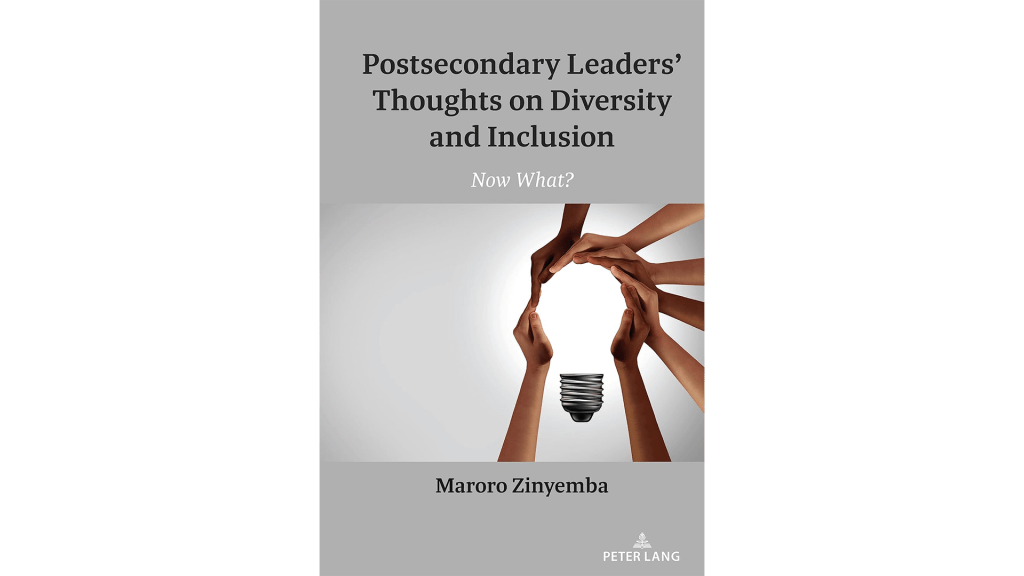
Excerpt from the Book
Since becoming a leader, I have longed for a book that discusses how leaders of postsecondary institutions who have made public commitments to values of diversity and inclusivity make meaning of these values. This is particularly important at a time when there is increasing diversity in the student population on postsecondary campuses. It is also key to understand how leaders make sense of and enact these values at a time when there are increased calls to address social justice concerns such as racism in educational contexts. In my early years as a postsecondary leader, it quickly became apparent to me that the ways in which diversity and inclusivity were understood and enacted by postsecondary leaders did not always resonate with my positioning on these concepts. I am a black, female, African Canadian educator, and postsecondary leader. I have often been the only person of color sitting at leadership tables, a space in which I have had to mark my arrival. As I sat at this table in my early years, I reflected on the meaning of diversity and inclusivity to postsecondary leaders. I began to question how it came to be that there were not more leaders who are Black, Indigenous, and People of Colour (BIPOC) like me. I wondered how it came to be that senior and executive leadership lacked racial diversity, despite the public commitments to diversity, inclusivity, and equity. I wondered what other dimensions of diversity were not represented at senior leadership levels. I began to question how my colleagues and leaders from other postsecondary institutions understood diversity and inclusivity. I wondered what their realities were with respect to these concepts.
Book Publication
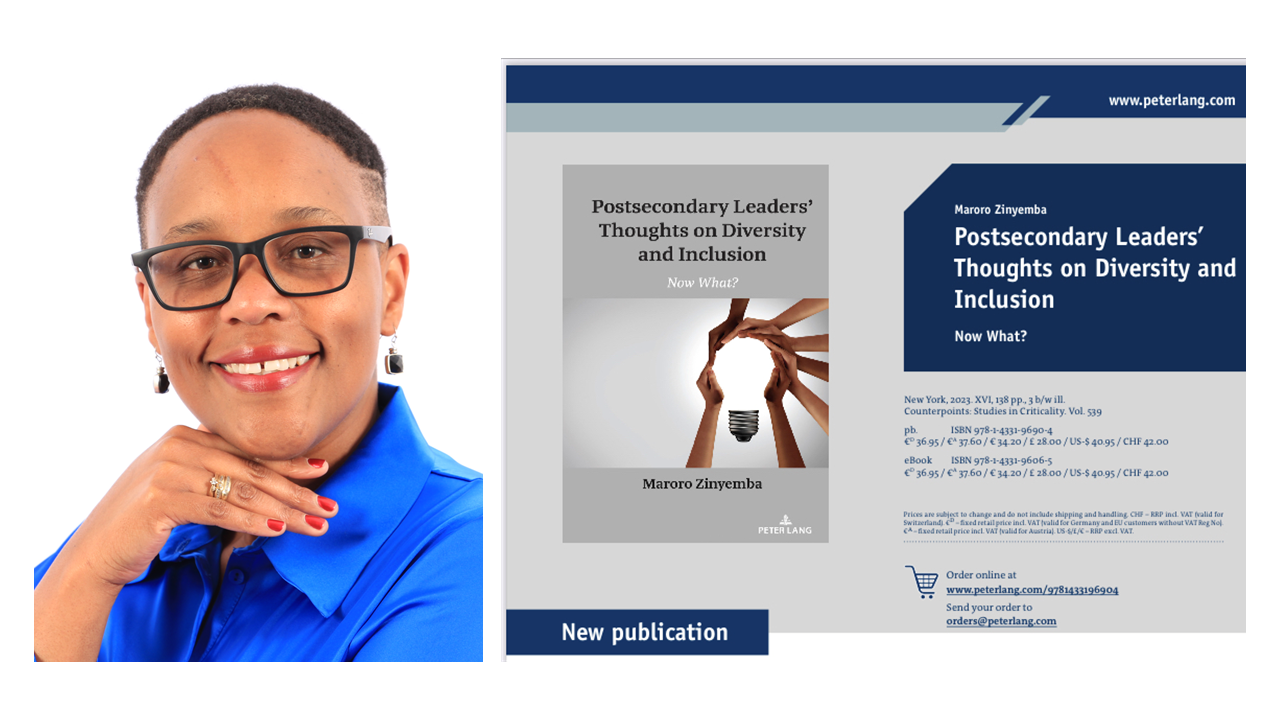
 Dr. Maroro Zinyemba